
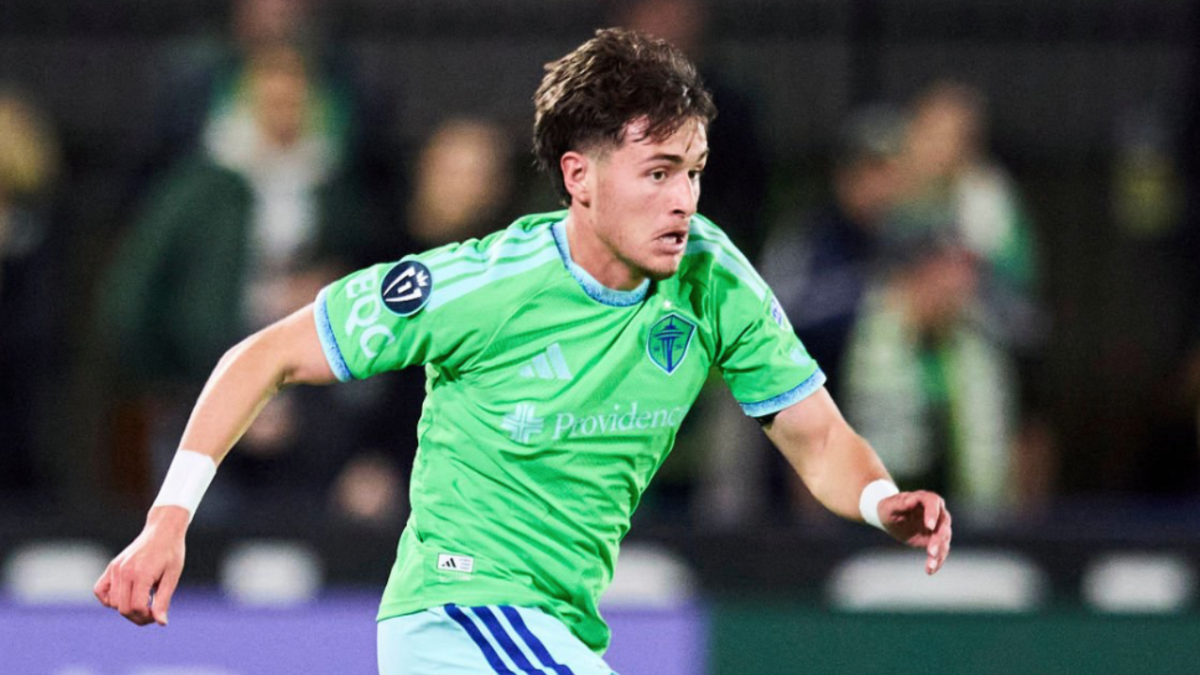
The Seattle Sounders have always made it a major priority to instill early confidence into their academy players. From Jordan Morris to DeAndre Yedlin to Obed Vargas, the list has continued to grow of players that have forced their way into the first-team picture and used that as a springboard to success at club level.
Snyder Brunell is looking to become the latest player on that list.
Brunell, 19, is nine matches into his first full season with the Sounders first team, continuing a positive start in Brian Schmetzer’s squad. The young midfielder still has a long way to go in the 2026 campaign, but has enjoyed the opening couple of months across multiple competitions.
“I’m feeling great,” Brunell told SBI in an interview. “The start of the season, I was on the bench, but I was ready for whatever moment I could get. As the games kept going, I progressed, I got more minutes and was just ready mentally and physically. Right now I’m feeling physically great, mentally great, and happy just on the ball as well.”
Brunell might have grown up in the state of Texas, but it didn’t stop his early love for the game of soccer. An early exposure to the sport as a young kid carried over with him to his move to Washington as a nine-year-old before eventually joining up with the ever-popular Crossfire Premier Soccer Club.
After several years with Crossfire, Brunell joined the Sounders’ academy in 2021 and has since worked his way through the ranks. Brunell credited his youth days in Texas, his move to Washington, and his brother for helping him become who he is today.
“I moved to Washington when I was 9 for my Dad’s work,” Brunell said. “Obviously it has a hot climate in Texas, very different from Washington, but I feel like Texas really shaped the player who I am. I was always doing extra sessions, playing like 3 vs. 3 games, just always touching the ball, wanting to play soccer. My brother was originally playing baseball but then he got into soccer and then I was born I was always going to a match. Soccer was big to us and to our community.
“Then when I moved to Washington, I felt like Crossfire helped with my attacking overall and also played a part in making me who I am,” Brunell added. “It was a hard change to move away at a young age because we didn’t have any family or connections here, but I was able to make some friends and that helped. Being adjustable and adaptable definitely helped me.”
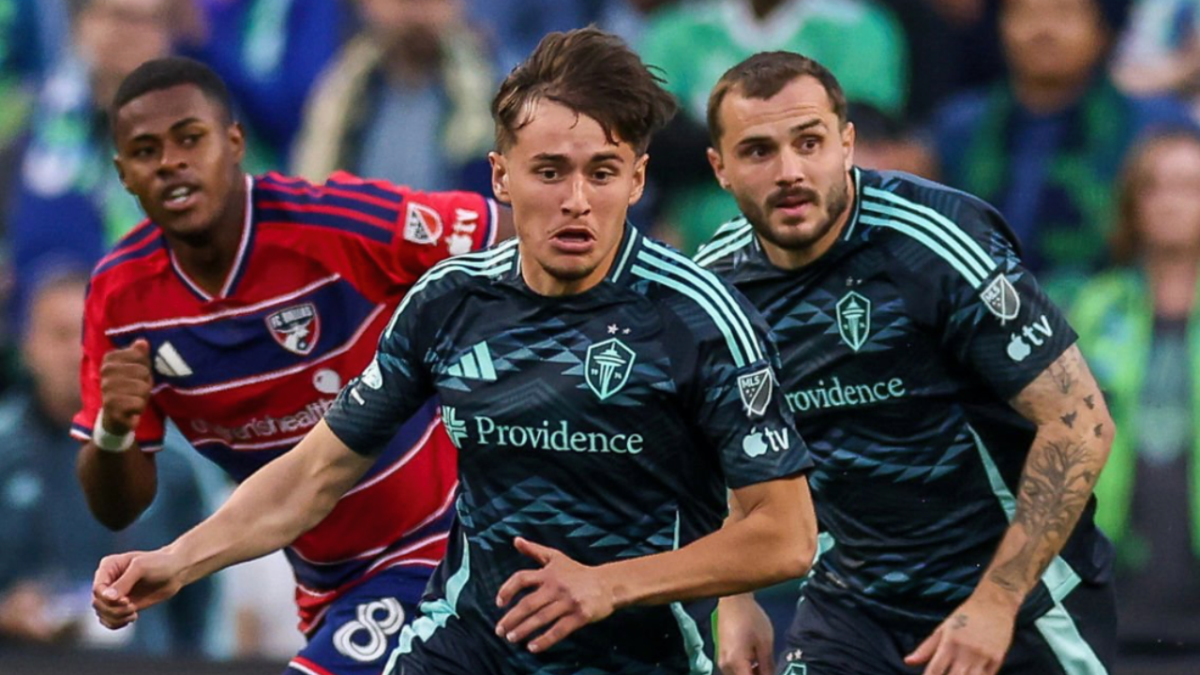
Brunell’s next jump came to Seattle’s MLS NEXT Pro affiliate, Tacoma Defiance, from 2022-25, where he scored seven goals in 57 appearances. In MLS NEXT Pro, Brunell was able to earn consistent minutes before eventually making his first-team debut in 2024 and later stay as a squad player.
MLS NEXT Pro allowed Brunell to not only compete against other clubs’ promising academy talents, but also veteran players who may have dropped down from the first-teams squads. He reflected on his MLSNP experiences and why they were so crucial in helping him become a consistent MLS player now.
“MLS NEXT Pro was a very important tool because whenever you see those older veterans drop down and play with other other teams, you know that gives you more incentive to want to play better and really attack it from a team perspective,” Brunell said. “It gave me the sense that I can really hang with these players and I can perform at this level.
“It was really about sticking to it and just continuing to perform, even at the MLS NEXT Pro level,” he added. “I played there a couple of times last year and even after I signed with the first team, but that doesn’t mean you can take it easy. You want to play well and you’re trying to improve your level, no matter what it takes. The Sounders keep the identity the same no matter what level you’re in, so I was always trying to level up and progress my future with the first team.”
When Brian Schmetzer’s managerial career is over, he will certainly go down as one of the best to work in MLS. Schmetzer played for the Sounders at both the indoor and outdoor level before becoming head coach from 2002-08′ and then again from 2016 to the present.
The 63-year-old has been part of two MLS Cup-winning squads, four U.S. Open Cup titles, one CONCACAF Champions Cup triumph, one Leagues Cup, and one Supporters’ Shield success (combined between head coach and assistant). Schmetzer has continued to keep the Sounders as one of MLS’ consistent clubs each and every year, a testament to his belief in providing opportunities to young players.
Brunell hasn’t worked with Schmetzer entirely long at the first-team level, but praised the longtime head coach’s impact on his career to date.
“I feel like that really pushed me and gave me confidence,” Brunell said about Schmetzer’s early confidence in him as a teenager. “I feel like overall though, you got to get that confidence from yourself. You got to keep continuing to do things that you’re doing in the gym, in film, doing extras, and the coaches will see those things. They’re not going to tell you to go do extra, go do this and that, so when they see you putting the extra work in, they get the sense you want it more. They get the sense that we can trust him more.
“He’s giving me a ton of confidence,” Brunell added. “‘He’s been really positive and he’s given me feedback. He’s not just being super nice, he’s going to be tough on me at times and I feel like that’s what’s really great about him. We need to be critical because in order to be a great player, you’re going to have to be able to take feedback, and I like that. He’s able to really kind of push you and get you in that right mindset that’s been able to push me to the next level.”
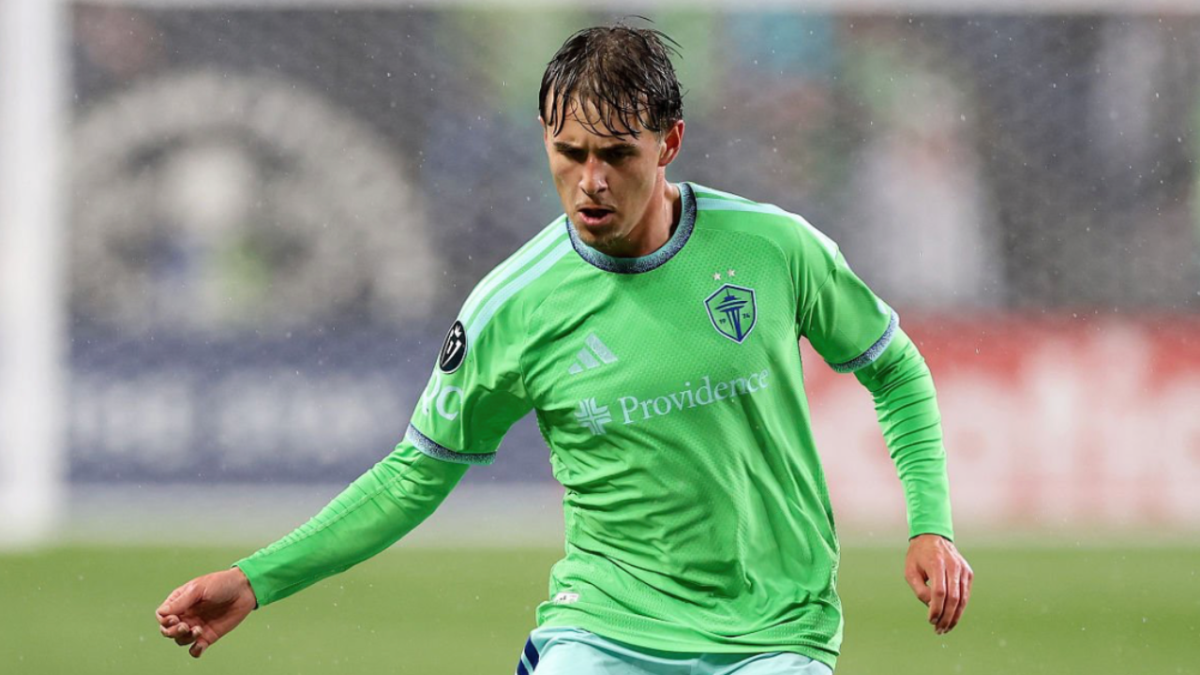
Not only has Brunell been able to earn early minutes in MLS, but he’s also been able to feature in some of CONCACAF’s toughest venues. Brunell started in both of the Sounders’ Champions Cup quarterfinal matches against Liga MX side Tigres earlier this spring, including playing 87 minutes in a 2-0 second leg loss at Estadio Universitario.
Not many young players are able to experience a road match in Mexico before they turn 20-years-old, but Brunell was a rare exception. Although the Sounders’ CONCACAF run came to a disappointing ending, Brunell relished the experience of playing in a hostile road atmosphere against one of the federations’ best teams.
“It was a really great experience,” Brunell said about playing in Mexico. “I played in Mexico before with the Academy so I felt like that honestly it had given me a good understanding of what can I expect against Mexican teams. It was a little more physical, a little more individual, a kind of more individual brilliance.
“They have really passionate fans and are a really good team, a really historic team,” he said. “I didn’t really want to shy away from it, I wanted to treat it like another game and go out there and play. I felt like our team played really well and it was kind of an unfortunate result. I wanted to use that match as a learning experience and think okay how can I translate this over into my game going forward?”
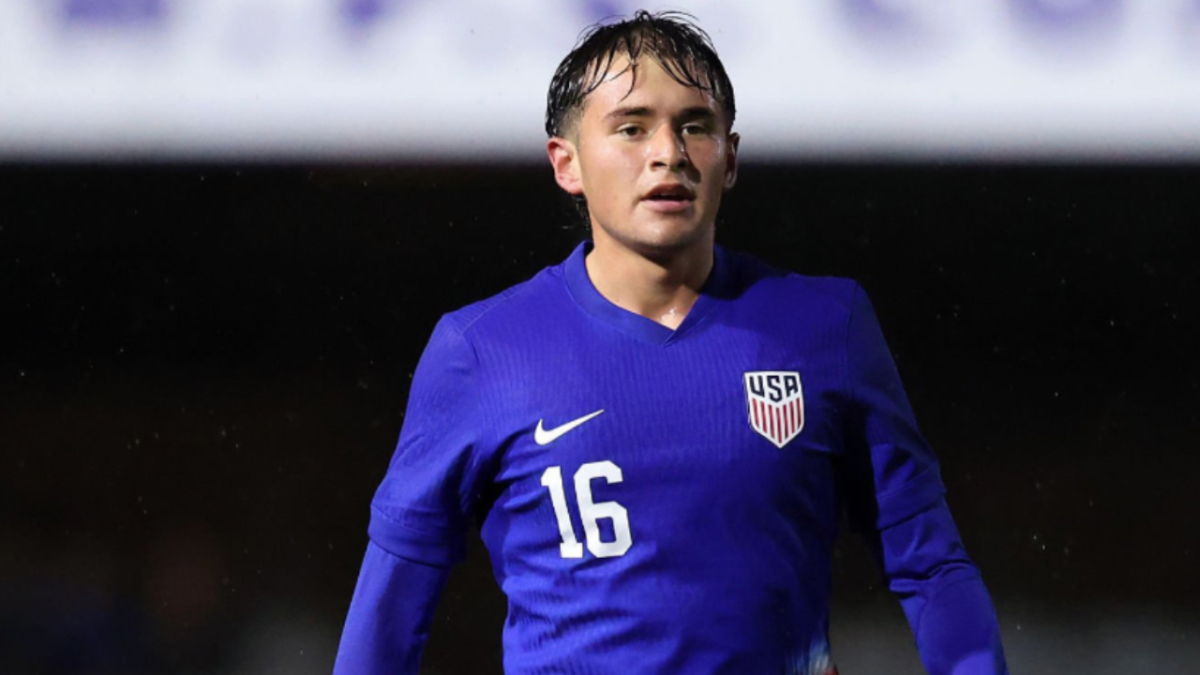
Brunell’s surge up the club level ranks has also led to continuous opportunities on the international level within U.S. Soccer. In 2025, he featured for both the U.S. Under-18 and Under-19 men’s national teams, earning six caps between the two squads.
While he won’t be eligible to feature for the USMNT U-20’s at the 2027 FIFA U-20 World Cup, Brunell remains an option for the USMNT ahead of the 2028 Summer Olympics, as well as the next senior World Cup cycle.
Brunell can sense the growing competition within U.S. Soccer at all age levels, knowing that everyone wants to be on the USMNT’s radar for years to come.
“I think what’s good is that it’s so competitive and we’re always going to push each other,” Brunell said about the competitiveness in USYNT camps. “We know that our spot isn’t guaranteed and that we’re going to have to keep pushing at club level and especially when we’re called into camp. I feel like everyone is performing at camps and the senior team is the goal for everyone.
“Everyone at camp is always pushing so even when you’re home it’s about trying to work on the things that you can get better so you can make that push to the first team level,” he added. “Whether you get called up or not, the angle is always going to be making the senior national team and staying there.”
The Sounders are currently fourth in the Western Conference and riding a six-match unbeaten run in league play. Seattle may be eliminated from the CONCACAF Champions Cup, but they have several opportunities to lift silverware this season, which includes MLS Cup, the Supporters’ Shield, and Leagues Cup.
Brunell is not only looking to remain a consistent starter in MLS this season, but also help the Sounders win everything possible.
“Individually I want to continue getting more goal contributions,” Brunell said. “I just got an assist recently so I wanted to continue adding onto that. I feel like I can definitely help the team in that aspect, but then overall as a team, I feel like we can, we can go for any trophy we put our mind to.
“Obviously, we’re out of CONCACAF but I felt like we represented our state and our country pretty well,” he added. “So I feel like now we can go extra hard for MLS Cup, Supporter Shield and for the Playoffs. We aren’t out of the Supporters’ Shield picture and we have matches in hand over some other clubs so we’re definitely pushing for everything.”
Brunell, Raines, Leroux, Habroune and Mehmeti are all very promising CM’s/DM’s
MLS Academies are finally starting to produce the kind of talent you’d expect well-funded, professional academies to produce…but as a guy who knows the youth system – with all its failures and foibles – from the inside, I can tell you the same thing anybody involved in the game knows – the biggest problem was the pay-for-play model. With pay-for-play, you wind up with a lot of rich dentist’s kids playing on public field space that youth club directors with annual seven-figure salaries who drove sponsored Land Rovers around had conquered like it was a military campaign, and even the pro academies of Atlanta United and Charlotte FC were originally built on the backs of a lot of these money machines. The biggest problem with these pay-for-play clubs is the gatekeeping – they fund just enough “scholarships” to claim to be reaching out to disadvantaged kids while effectively boxing out any competition. And for the first few years these hybrid pro/local youth academies just changed their letterheads and the logo on their jerseys and kept right on with business as usual.
The end to that was always going to have to be the pro academies. It’s obvious in about ten minutes to anybody who’s ever dealt with the USSF system that these pay-to-play outfits making ludicrous money by gatekeeping a kids’ game were going to have to get out of the way to even come close to identifying and developing the kind of talent they’d need to be successful. What we’re (finally!) seeing now is that the older academies – Dallas, Seattle, NYRB, Philadelphia – have finally started to mature and take better control of their outreach and pipelines, and bit by bit this is slowly driving pay-for-play out where it’s taking root. Pro-club sponsorship and cost underwriting is the norm in Europe, and breaking that stranglehold will unlock a truly staggering amount of young talent that’s always been there…but has always typically fizzled from U13-or-so on here in the US because the infrastructure to develop the real talented ones – as opposed to those who could afford to pay for the privilege – further was never in place.
It’ll take a minute because we’re not even close to peak saturation – England supports 200 or so pro clubs, all with their own academies – in a nation of 60M people, and the US has less than 90 in a nation of 330M. If we get up to even half of England’s coverage over the next 15-20 years, with 3-plus clubs per million residents, you’d be looking at 500+ pro and semi-pro clubs with their own academy systems.
That’d be a fascinating pyramid. And the talent pouring out of it would be insane. The youth participation has always been there, the developmental infrastructure wasn’t. But we’re seeing the talent level ratcheting upwards every year…and as somebody who struggled through the Dark Ages of US soccer in the late ’90’s and early 2000’s, when MLS 1.0 was still very much a bad joke teetering on the edge of insolvency, it’s pretty durn cool to see.